Drilled Shaft vs. Driven Pile: Choosing the Right Foundation for Infrastructure Projects
By Sadler Electric, Inc. — Omaha & Council Bluffs Infrastructure Contractors
Deep foundations are required when surface soils cannot support the structural loads or lateral forces of a project. Two methods dominate transportation and civil infrastructure work in the Midwest: the drilled shaft (also called a drilled pier or bored pile) and the driven pile. Choosing between them depends on load type, site conditions, environmental constraints, cost, and the specifications of the governing agency. This guide explains both methods and the conditions under which each is the right choice for infrastructure projects in Nebraska and Iowa.
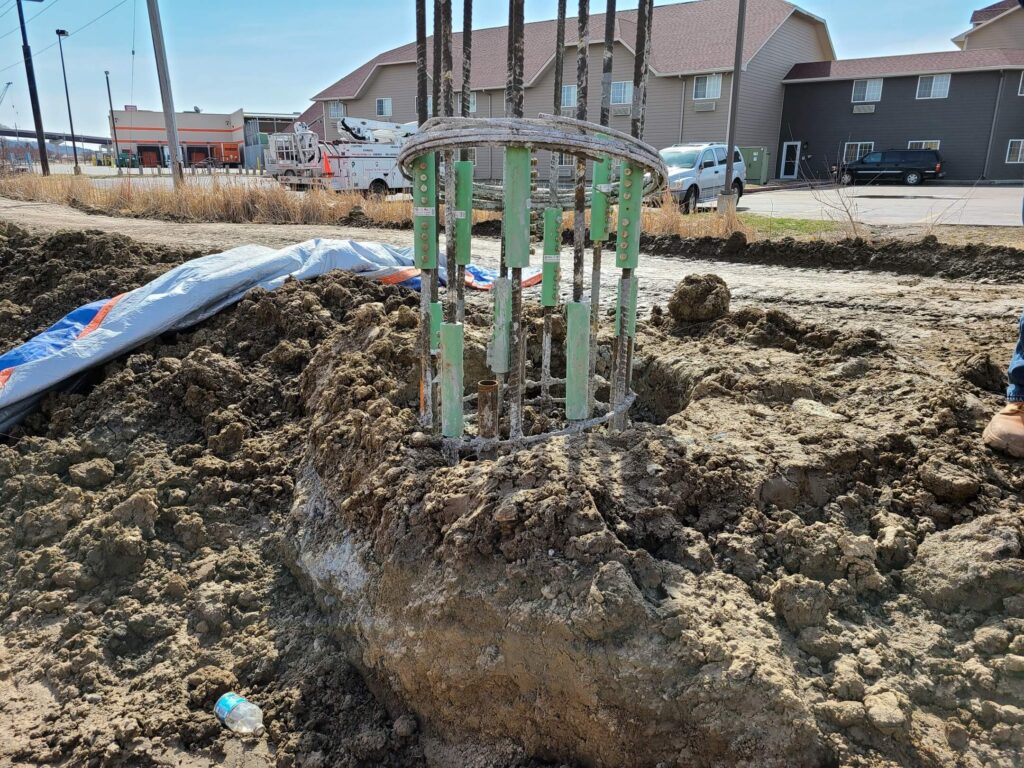
What Is a Drilled Shaft?
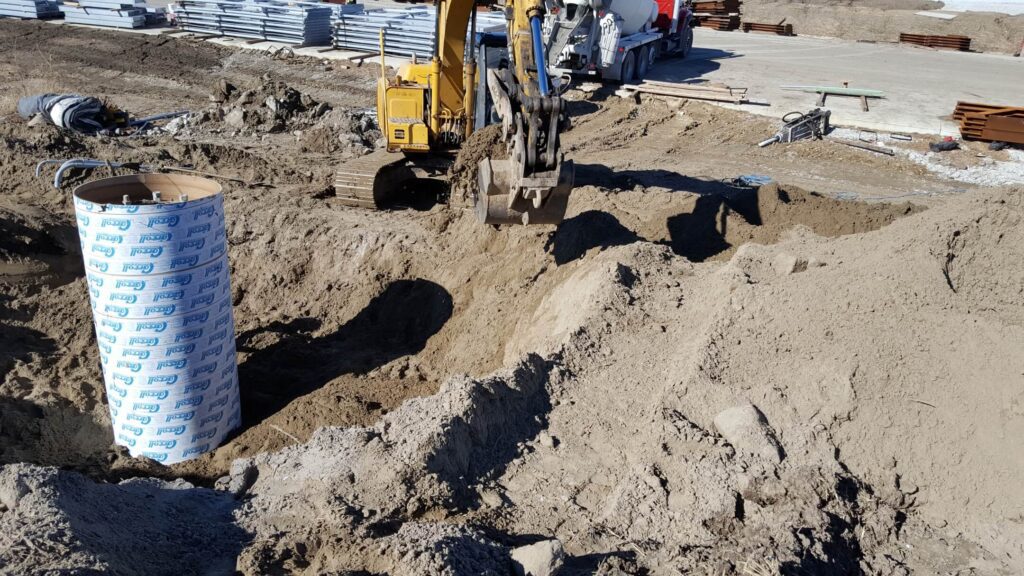
A drilled shaft is a cast-in-place deep foundation. A drill rig bores a cylindrical hole into the earth, a reinforcing steel cage is lowered into the hole, and concrete is placed to fill the excavation. The result is a continuous column of reinforced concrete bonded directly to the surrounding soil or rock.
Drilled shafts can be constructed in diameters from 18 inches to 10 feet and in depths from 10 feet to more than 100 feet, making them one of the most flexible foundation types available. For transportation infrastructure — signal poles, mast arms, highway light poles, overhead sign structures, and bridge piers — drilled shafts are the most common foundation method used by state DOTs across the region.
What Is a Driven Pile?
A driven pile is a pre-manufactured element — typically a steel H-pile, steel pipe pile, precast concrete pile, or timber pile — that is installed by driving it into the ground with a hydraulic hammer, vibratory driver, or pressing equipment. The pile displaces or compresses the soil as it advances.
Driven piles are widely used for building foundations, bridge pile caps, marine structures, and earth retention systems. They can be produced to high quality control standards in a fabrication plant and are often available in large quantities, which matters for large-scale projects requiring hundreds of elements.
Head-to-Head Comparison: Drilled Shaft vs. Driven Pile
Vibration and Noise
Driven piles generate significant ground vibration and impact noise during installation. A hydraulic hammer striking a steel pile produces measurable ground vibration that can damage adjacent pavement, disturb nearby underground utilities, and exceed noise ordinance limits in urban areas.
Drilled shafts are installed by rotating an auger or drill bit, which produces minimal vibration and lower noise. This is why drilled shafts are the default choice for traffic signal poles in urban Omaha and Council Bluffs: the work happens at busy intersections surrounded by existing infrastructure, pavement, buried utilities, and operating businesses.
Site Access
A driven pile requires a pile driver — a crane with a large lead and hammer assembly that typically needs 15 to 30 feet of vertical clearance and a working area of 30 to 50 feet around the pile location. This is impractical at many signalized intersections in urban environments.
Drill rigs for signal and light pole foundations are purpose-built for urban work and can operate in significantly tighter spaces. Some equipment is compact enough to work within the clear zone of a single travel lane.
Diameter and Load Capacity
Drilled shafts can be constructed in larger diameters than most driven piles. A 48-inch drilled shaft — common for long-span mast arms and overhead sign bridges — has no practical driven pile equivalent in a standard highway project. The large diameter also provides excellent moment (rotational) resistance, which is the critical design parameter for signal and light poles under wind load.
Driven piles in the H-pile or pipe pile sizes common in Midwest highway work are generally more suited to axial compression loads (vertical building columns, pile caps, bridge footings) than to the high lateral and moment demands of a signal pole.
Cost
For small quantities — one to four elements per project, which is typical for a signal installation — drilled shafts are generally competitive with or less expensive than driven piles. Mobilizing a pile driver for a single pole foundation at an intersection is not economical.
For large quantities on deep-foundation projects (bridge substructure with 20 to 100 pile elements, for example), driven steel H-piles may be more cost-effective per element because of production rate and pile material costs.
Construction in Rock
When the bearing stratum is rock, drilled shafts can be constructed with rock augers, core barrels, or down-the-hole hammers that drill directly into the formation. A drilled shaft can be socketed into bedrock for high-capacity axial and lateral resistance.
Driven piles can also be driven to rock refusal — the point at which the pile stops advancing under repeated hammer blows — but driving through hard rock or into a thin rock surface is problematic; piles can deflect, buckle, or damage the rock formation.
In Nebraska, bedrock is typically at depth (several hundred feet below grade in the Omaha area), so rock is not a routine factor in signal foundation design. In some Council Bluffs and Iowa DOT applications near the Missouri River Bluffs, shallow rock may be encountered.
Quality Control and Inspection
Drilled shafts allow direct inspection of the borehole before concrete placement — a geotechnical inspector can measure cleanliness, base condition, and water level. The reinforcing cage is visible during placement. Concrete can be sampled at the truck.
Driven piles are monitored by blow count during driving, and integrity testing (Pile Driving Analysis, High Strain Dynamic Testing) can be performed to evaluate bearing capacity and structural integrity after driving.
Both methods support rigorous quality assurance programs. State DOTs in Nebraska and Iowa have documented inspection procedures for both foundation types.
Which Method Is Right for Your Project?
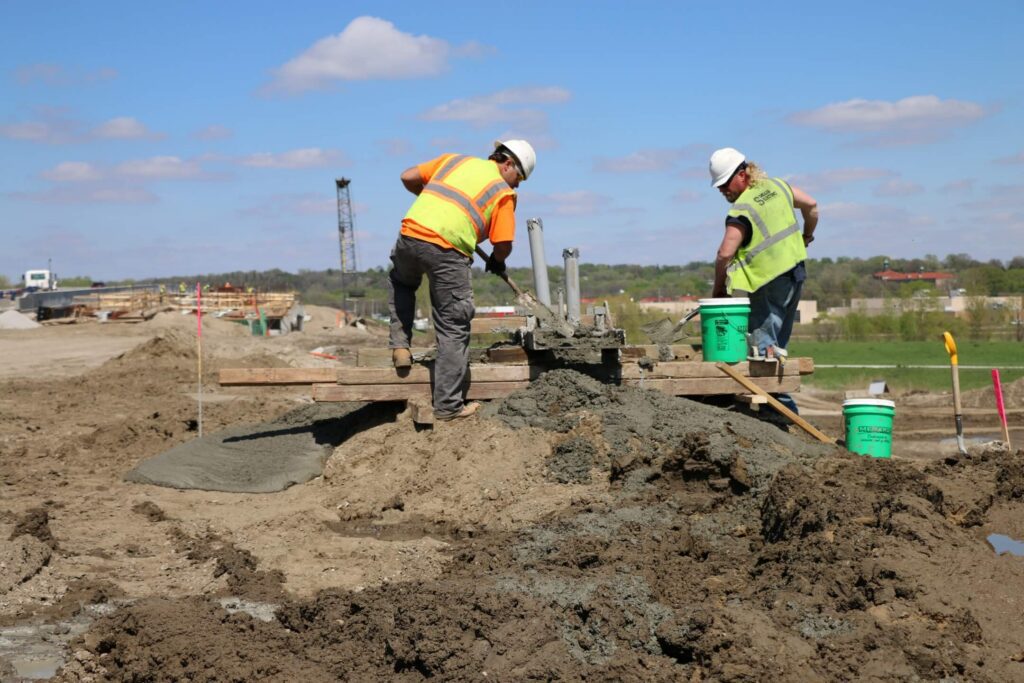
For traffic signal poles, mast arms, roadway lighting, and highway sign structures in urban Nebraska and Iowa: drilled shafts are the standard. The combination of urban site constraints, the lateral/moment-dominant loading from wind, the need for accurate placement to anchor bolt templates, and the vibration sensitivity of surrounding infrastructure make drilled shafts the appropriate choice in almost all cases.
For large DOT bridge projects with multiple piles in less constrained areas, driven steel H-piles or pipe piles may be more economical and appropriate, depending on the geotechnical profile.
Sadler Electric, Inc. performs drilled shaft foundations for traffic signal and infrastructure projects throughout the Omaha and Council Bluffs service area, including Douglas, Sarpy, and Pottawattamie Counties. The company constructs shafts using dry, wet, and cased methods — including both temporary and permanent casing — for signal poles, mast arms, roadway lighting, and highway sign supports. Whether experience documentation and a project-specific drilled shaft installation plan are required, and in what form, is set by the bid documents for the individual project. Check the applicable NDOT or Iowa DOT contract. Contact Sadler Electric at (402) 331-3217 or sadlerelectric.com.
This article presents general guidance on foundation selection. Site-specific conditions, agency specifications, and the recommendations of a licensed geotechnical engineer govern all actual foundation design decisions.
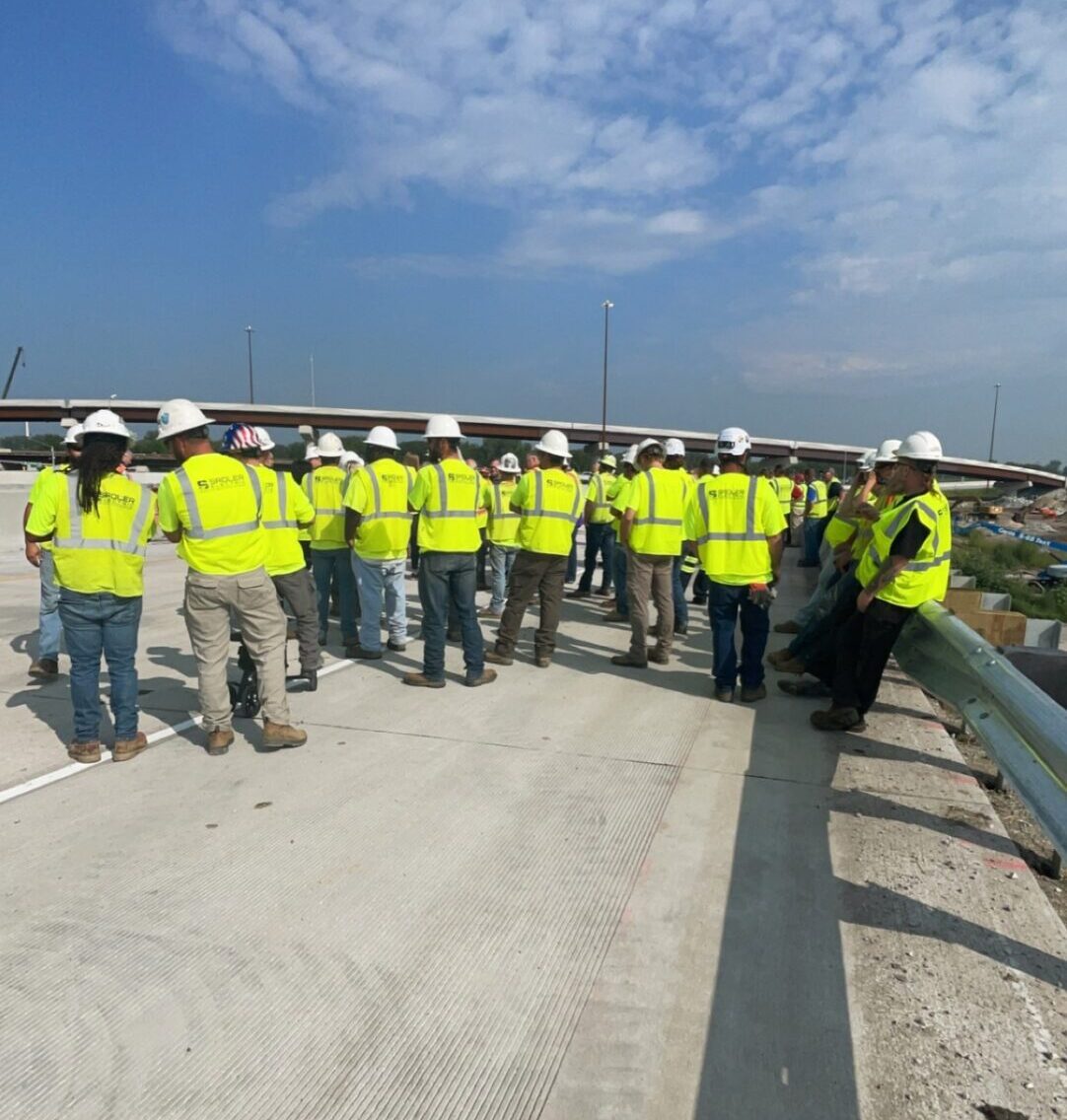
Planning a Drilled Shaft Project?
Sadler Electric installs drilled shaft foundations in the Omaha and Council Bluffs area. Call (402) 331-3217 or send us a message to talk through your project.