How Much Does a Traffic Signal Cost? A Complete Pricing Guide
By Sadler Electric, Inc. — Omaha & Council Bluffs Traffic Signal Contractors
Traffic signal systems are among the most technically complex infrastructure installations at a standard intersection. The total cost of a new traffic signal in the United States ranges widely based on intersection geometry, number of phases and approaches, underground utility conditions, and local labor and material markets. A realistic range for a fully equipped new signal at a standard four-way intersection is approximately $250,000 to $500,000 installed, with urban intersections in dense utility corridors and large-mast-arm configurations at the higher end. High-complexity signal systems with adaptive control, detection, or CCTV integration can exceed $600,000.
These figures are consistent with Federal Highway Administration (FHWA) cost data and Nebraska DOT bid data for signal projects in the Omaha metro area. Individual project costs vary significantly; obtain competitive bids from qualified contractors for any project estimate.
The Main Cost Components of a Traffic Signal System
Signal Poles and Mast Arms
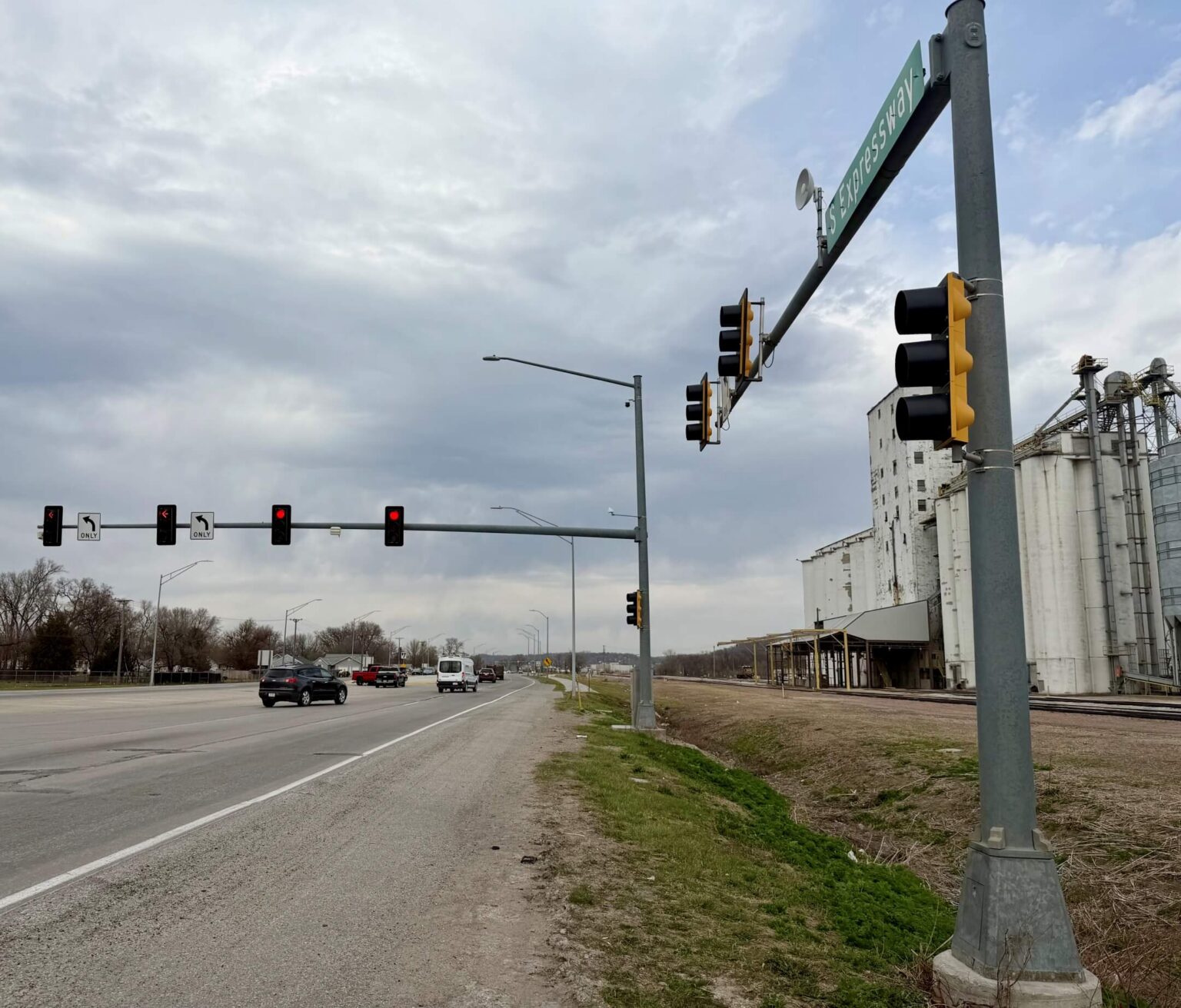
Traffic signal poles are steel monopoles or multi-section poles designed to carry signal heads and pedestrian equipment. A standard signal pole with a single arm costs roughly $3,000 to $8,000 in materials. Mast arm poles — the cantilever arms spanning across one or more lanes — are significantly more expensive: $10,000 to $30,000 each in materials, depending on arm length, wind loading requirements, and whether the arm is single or dual.
Nebraska DOT and Iowa DOT standard drawings specify steel pole and mast arm requirements for state-owned signals. Local municipal signals may follow the same standards or have city-specific specifications.
Drilled Shaft Foundations
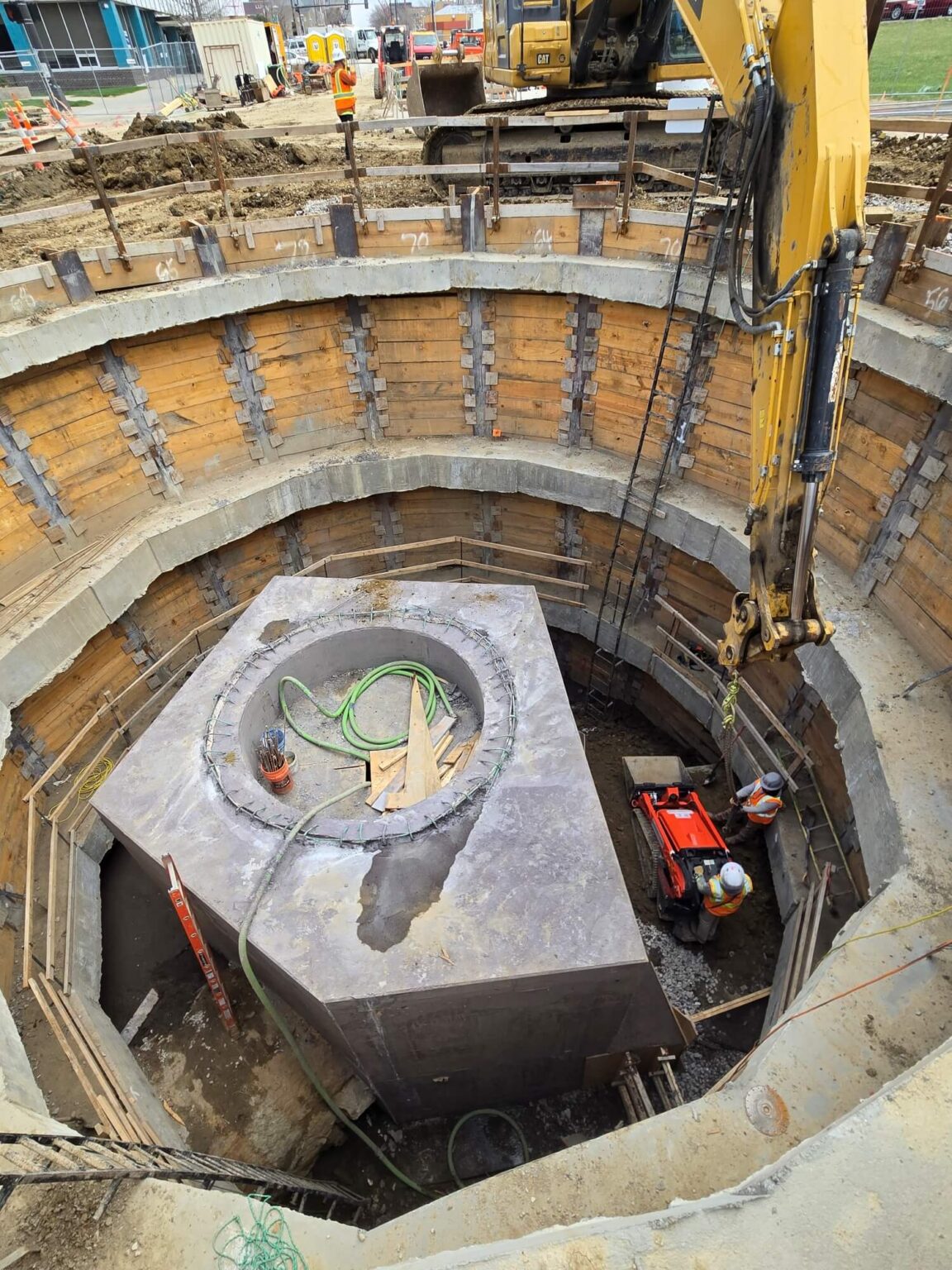
Every signal pole and mast arm requires a drilled shaft foundation. The shaft transfers wind loads — the dominant design force on a signal pole — into stable soil below the frost line. A standard signal pole drilled shaft in Omaha-area soil conditions (typically 18 to 24 inches in diameter and 10 to 18 feet deep) costs roughly $4,000 to $10,000 installed, including drilling, reinforcing cage, concrete, and anchor bolt template.
Large mast arm shafts are more expensive: a 30 to 36-inch diameter shaft at 18 to 25 feet may cost $15,000 to $30,000 depending on site conditions, groundwater, and access constraints. Across a full four-way intersection with four mast arm poles and four pedestrian poles, drilled shaft costs alone may total $50,000 to $100,000.
Underground Conduit, Pull Boxes, and Conductors
The underground electrical system connecting the controller to signal heads, detection loops, and pedestrian push buttons is a substantial cost component. A standard intersection requires 1,000 to 2,500 feet of conduit in multiple runs, 12 to 24 pull boxes, and the associated conductors.
Conduit unit costs range from $40 to $120 per linear foot installed, depending on trench conditions, existing pavement type, depth to crossing utilities, and whether dewatering is required. A full intersection underground package typically runs $60,000 to $130,000.
Signal Heads, Backplates, and LED Modules
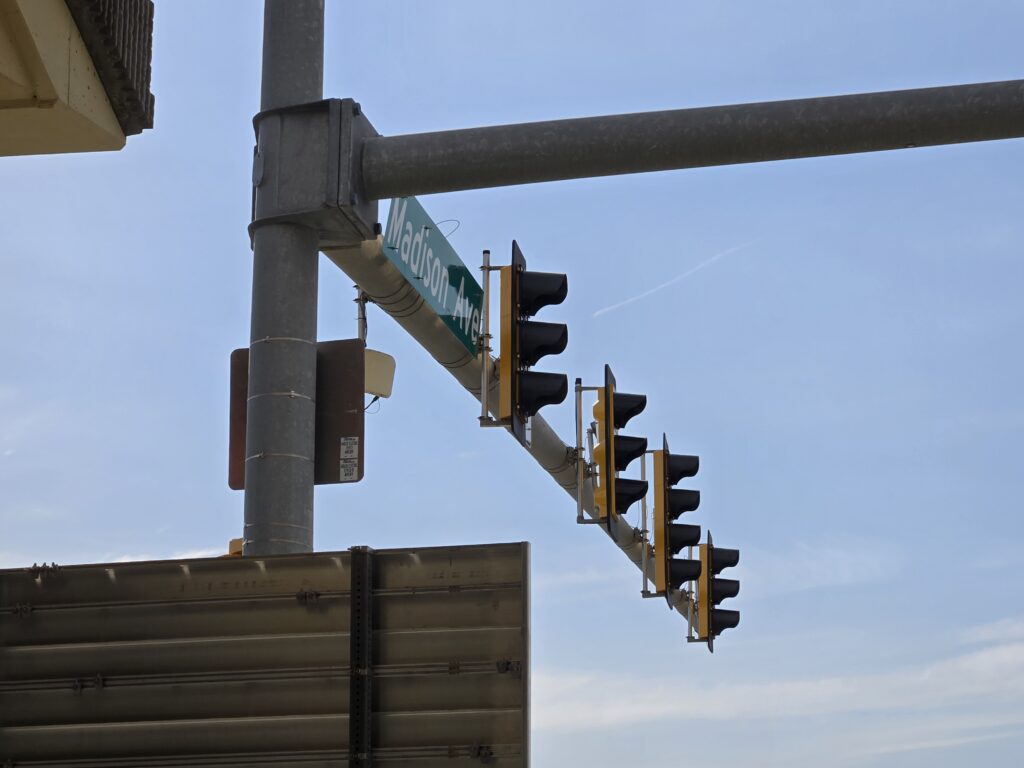
Modern signal heads use LED modules. A complete signal head assembly — housing, lens frames, LED modules, and visors — costs approximately $600 to $1,500 per head. A standard four-approach intersection has 8 to 16 vehicular signal heads and 8 to 12 pedestrian signal units, totaling roughly $12,000 to $30,000 in signal head equipment. Backplates (the dark surround that improves daylight visibility) add $150 to $400 per head position and are required by many agencies.
Controller Cabinet and Signal Controller
A fully assembled modern signal controller cabinet — including the controller unit, conflict monitor, load switches, and internal wiring — costs $18,000 to $35,000. Advanced features such as adaptive control, transit signal priority, emergency vehicle preemption, or fiber communications add cost. Cabinets require a concrete foundation pad, electrical service connection, and conduit runs between the cabinet and each phase of the intersection.
Electrical Service
A new signal requires a utility company to extend electrical service to the cabinet location. Service connection costs vary by utility and distance but typically run $3,000 to $15,000. In Omaha, OPPD serves most urban signals. In Council Bluffs, MidAmerican Energy provides service to the majority of the urban area.
Pavement Restoration
Conduit installation requires saw-cutting and open-cut trenching of existing pavement. Pavement restoration — replacing cut sections in kind — costs $10,000 to $40,000 at a single intersection, depending on the total area disturbed and whether the surface is asphalt or concrete.
Engineering, Inspection, and Permitting
Signal design plans prepared by a licensed Professional Engineer are required for state and local agency approvals. Design fees for a standard signal vary from $15,000 to $40,000. Construction inspection — required on all federal-aid projects — adds $10,000 to $30,000. Permit fees are typically minor relative to these.
What Drives the Difference Between Low and High Estimates
The four biggest cost variables are:
Intersection size and number of approaches. A simple T-intersection with one mast arm costs far less than a six-leg urban intersection with multiple left-turn phases, bicycle detection, accessible pedestrian signals, and fiber interconnect.
Site conditions. Groundwater in the trench zone, cobbles or boulders in the drill path, existing utilities in conflict with conduit routing, and pavement type all affect underground cost substantially.
Agency specification level. A Nebraska DOT-standard signal with CCTV, adaptive control, and emergency preemption is a different scope from a locally maintained signal with a time-of-day controller.
Labor market and project timing. Prevailing wage requirements on federal-aid projects, regional craft labor availability, and material lead times all affect final pricing in any given bid cycle.
Traffic Signal Installation in Omaha and Council Bluffs
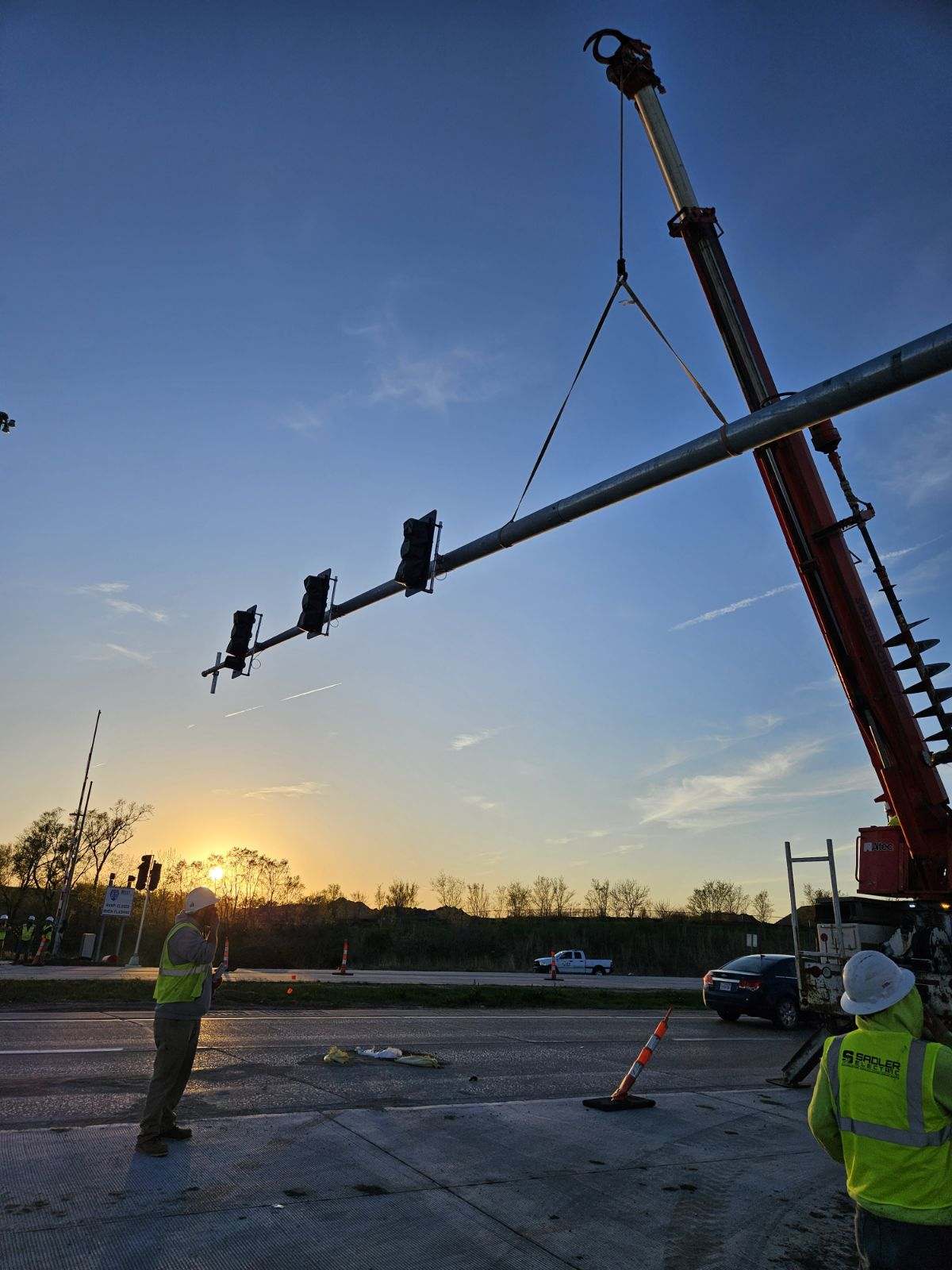
Sadler Electric, Inc. is a specialty infrastructure contractor serving the Omaha and Council Bluffs metro area. The company performs traffic signal installation, drilled shaft foundations, roadway lighting, and highway signing for Nebraska DOT, Iowa DOT, municipal, and general contractor clients throughout Douglas, Sarpy, and Pottawattamie Counties. The company holds Electrical Contractor licensing, employs Journeyman Electricians, and maintains IMSA certifications, along with prior documented history of similar installations. DOT prime contracts on these projects require contractor prequalification. Project scope ranges from a single intersection to 50 or more intersections depending on the contract type.
For questions about traffic signal installation or project estimates in Nebraska or Iowa, contact Sadler Electric at (402) 331-3217 or at sadlerelectric.com.
Cost ranges represent general market conditions as of 2024–2026 and are not project-specific estimates. Site conditions, agency specifications, and current market pricing determine actual costs. Engage a qualified specialty contractor for project budgeting.
Planning a Traffic Signal Project?
Sadler Electric installs traffic signals in the Omaha and Council Bluffs area. Call (402) 331-3217 or send us a message to talk through your project.