Traffic Signal Maintenance: What Municipalities and DOTs Need to Know
By Sadler Electric, Inc. — Omaha & Council Bluffs Traffic Signal Contractors
Traffic signals are safety-critical infrastructure. A failed signal head or a malfunctioning controller does not just create driver frustration — it creates liability exposure for the agency that owns the signal and a genuine hazard for drivers, cyclists, and pedestrians who encounter a dark or flashing red intersection. Traffic signal maintenance is not optional; it is an obligation that comes with operating a signal.
This guide covers what traffic signal maintenance involves, what the standards require, and what agencies and contractors responsible for signal systems in Nebraska and Iowa should plan for.
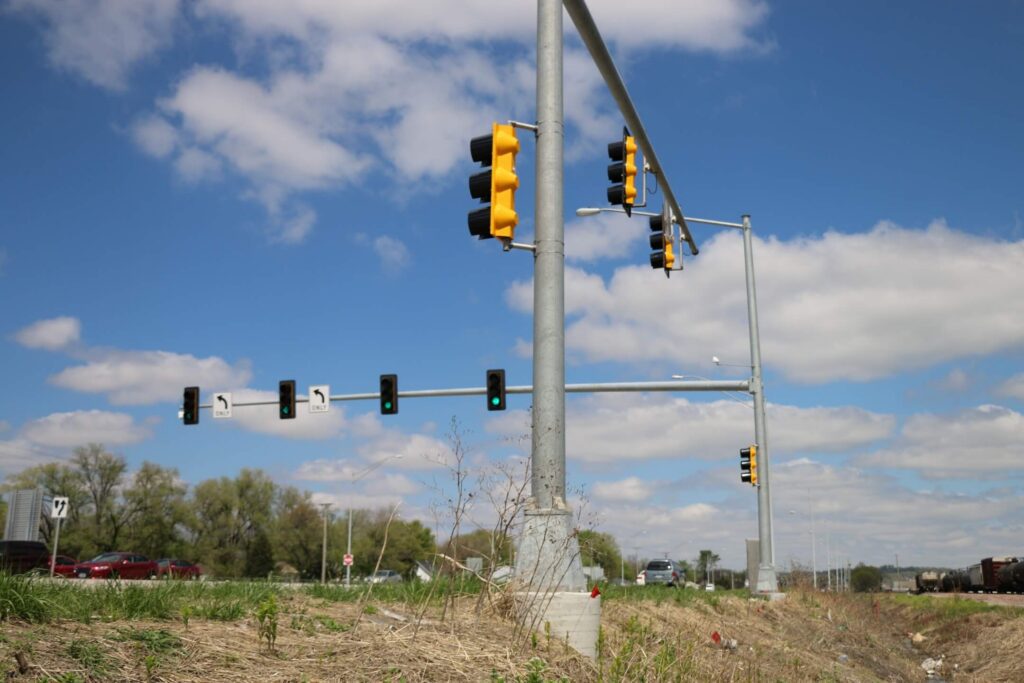
The Components That Require Maintenance
A modern traffic signal system consists of multiple interconnected components, each with its own service life and failure mode.
Signal heads and LED modules. LED modules generally use less energy and can have longer rated lives than incandescent sources, but performance depends on the product and operating conditions. Unlike incandescent bulbs, LEDs do not fail suddenly — they dim gradually. FHWA and ITE guidelines recommend replacing LED modules when luminous intensity drops below the minimum specified in MUTCD Table 4D-1. Agencies should track installation dates and anticipate module replacement on a planned cycle rather than responding to failures.
Signal controllers and cabinets. Controller replacement timing depends on the model, agency program, environment, supportability, and failure history. Controller failure can take several forms: loss of signal timing plan execution, communication failures in an interconnected corridor, or failure of the conflict monitor (a safety device that defaults the signal to flash mode if conflicting greens are detected). Cabinet internal components — load switches, power supplies, terminal blocks — are consumable items that require periodic inspection and replacement.
Vehicle detection. Loop detectors — inductive loops cut into the pavement — are the most common detection technology on existing signals in Nebraska and Iowa. Loops are damaged by pavement resurfacing cuts, freeze-thaw cycling, and heavy vehicle traffic. A loop that fails to detect vehicles produces false holds or missed phase calls. Detection maintenance should include periodic measurement of loop frequency and inductance, repair or replacement of damaged loops, and re-sealing of saw cuts to prevent water infiltration.
Video detection and radar detection units are increasingly common on newer signals. These require periodic field-of-view verification and firmware updates.
Pedestrian push buttons and accessible pedestrian signals (APS). When a signalized crossing is altered, the agency must evaluate the applicable ADA and accessibility requirements for the altered work. APS features may be required by the project design, agency standards, or applicable accessibility rules; confirm the requirement with the agency and engineer. Push button actuators and APS speaker/vibrotactile units require periodic function testing. A push button that does not recall a walk phase on demand is a deficiency that creates ADA liability and a safety gap.
Underground conduit and conductors. Signal conductors in buried conduit are generally long-lived — 20 to 40 years is typical for properly installed copper conductor in intact conduit. However, water infiltration through failed pull box covers, damaged conduit, or failed conduit seals can corrode terminations and cause intermittent faults that are difficult to troubleshoot. Pull box inspections should be included in any maintenance program.
Poles, mast arms, and anchor bolts. Pole design life and inspection requirements depend on the agency specification, environment, loading, and maintenance history. Inspect for corrosion, fatigue, and anchor-bolt deterioration under the owner’s program. Pole base inspections — including unbolting the hand hole cover to inspect the anchor bolt nuts — should occur on a scheduled cycle. A fractured anchor bolt or corroded nut can result in catastrophic pole failure under wind load.
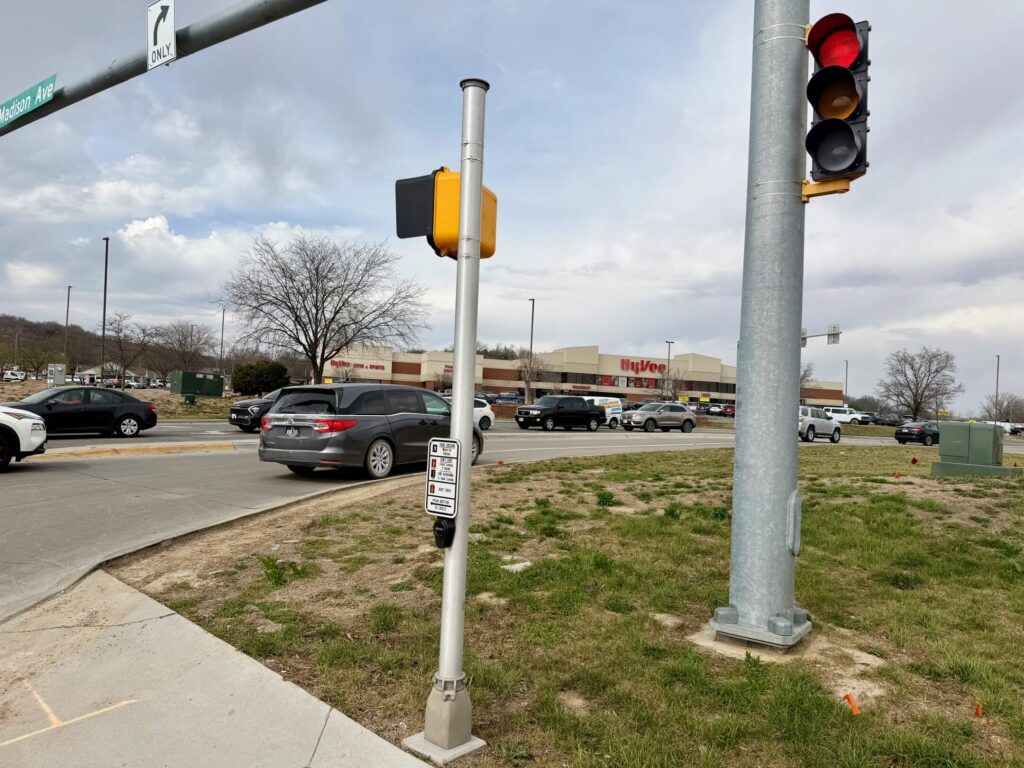
Routine Maintenance Tasks and Intervals
Maintenance intervals are owner- and asset-specific. The governing schedule is the agency's own written maintenance standard, read alongside the manufacturer's instructions, inspection findings, and local operating needs. The groupings below are a planning checklist of the tasks a signal maintenance program usually has to cover — not required intervals, and not a substitute for the agency's standard.
Checked most often:
- Function test all signal heads, pedestrian signals, and push buttons
- Test conflict monitor and emergency vehicle preemption
- Inspect cabinet interior: terminals, load switches, power supply, controller card
- Inspect pole base and anchor bolts for corrosion
- Review timing plans for currency
Checked on a multi-year cycle:
- Measure loop detector inductance and frequency; repair or replace degraded loops
- Re-seal loop detector saw cuts
- Inspect underground pull boxes; re-seal conduit entrances
- Test and recalibrate video or radar detection units
Reviewed as equipment approaches end of service life:
- Replace LED modules approaching end of rated life
- Evaluate controller technology for current specification compliance and communication protocol compatibility
- Review and update timing plans based on current traffic counts
Considered at major replacement planning:
- Consider full controller cabinet replacement
- Evaluate poles and mast arms for corrosion and fatigue
What Happens When Maintenance Is Deferred
Deferred maintenance on traffic signals creates compounding problems. A degraded LED module may still pass, which delays replacement until the module fails and creates a dark signal head. A failed conflict monitor causes the controller to enter flash mode — an immediate service call, disrupted traffic, and a signal out of operation until a technician can respond.
Pole base corrosion is a more severe deferred maintenance failure. The failure of a signal pole under wind load is a life-safety event. Several documented pole failures across the country have resulted from neglected anchor bolt inspection. An inspection program costs far less than the liability and emergency response a pole failure produces.
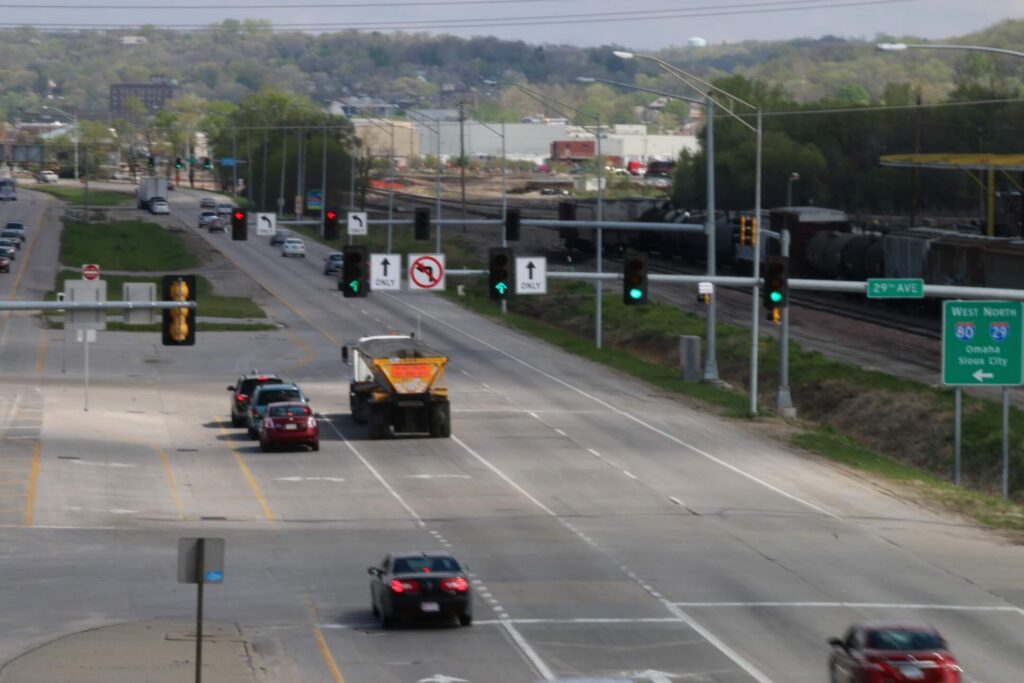
Traffic Signal Maintenance Contractors in Omaha and Council Bluffs
Sadler Electric, Inc. performs traffic signal maintenance and repair for municipalities and general contractors in the Omaha and Council Bluffs service area, serving Douglas, Sarpy, and Pottawattamie Counties. Sadler Electric supports surrounding areas when needed for emergency, corrective, and other support services on new and existing traffic signal systems. Contact Sadler Electric at (402) 331-3217 or sadlerelectric.com.
This article is general guidance on traffic signal maintenance practices. Consult the MUTCD, your state DOT's signal maintenance specifications, and a qualified traffic signal contractor for specific maintenance requirements on your system.
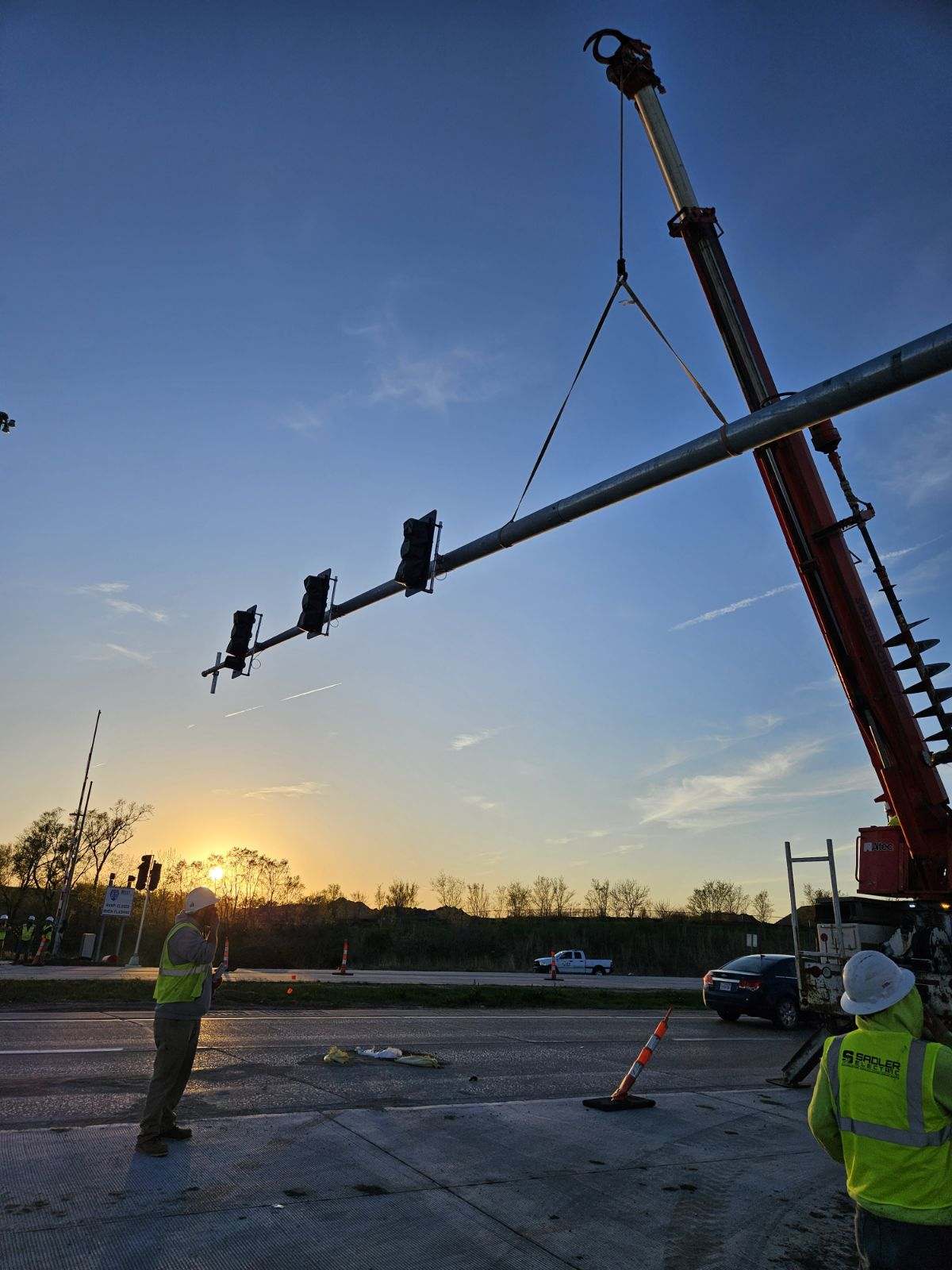
Planning a Traffic Signal Project?
Sadler Electric installs traffic signals in the Omaha and Council Bluffs area. Call (402) 331-3217 or send us a message to talk through your project.